
How Direct International Shipping from Japanese Online Stores Works
Direct international shipping means the Japanese online store accepts an overseas order, prepares it, and hands it to an international carrier for delivery to the shopper’s supported destination without a separate proxy buyer or forwarding address. It is available only when store support, item eligibility, destination eligibility, and service availability all align; import-charge responsibility, tracking detail, and delivery time remain conditional on the shipping terms, service, shipment, and destination.
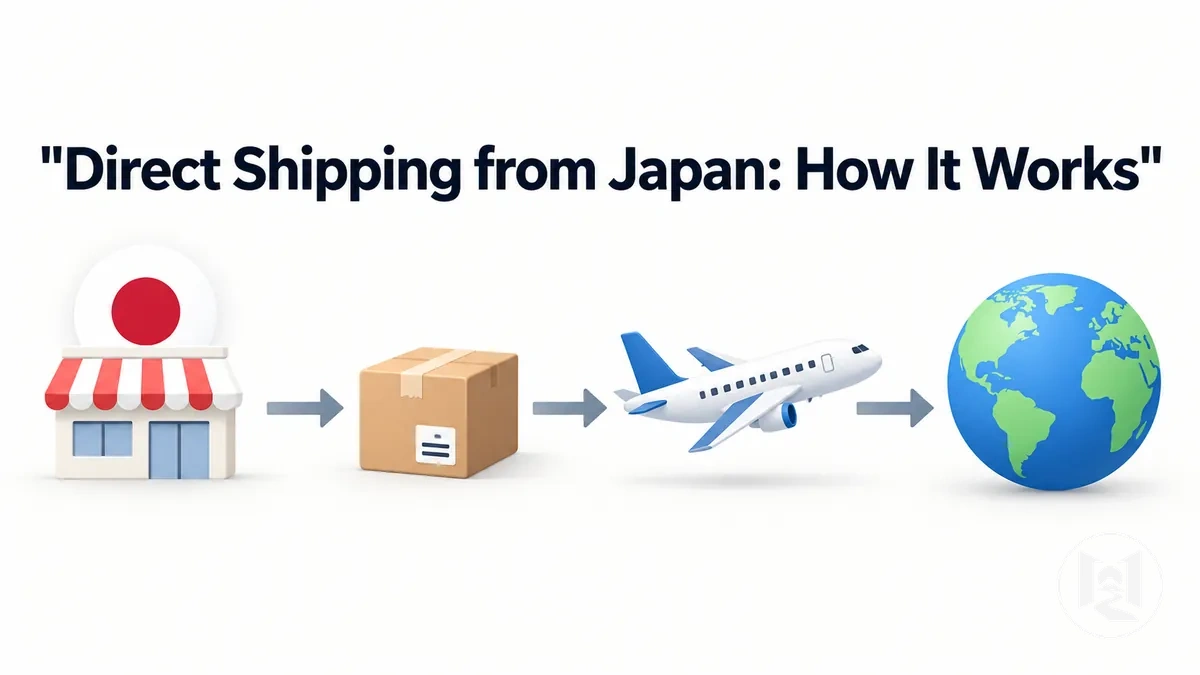
Direct international shipping at a glance
The method is defined by who fulfils the order and how the parcel enters international transport: the Japanese store accepts the overseas order and places the prepared shipment into an international carrier network for the recipient.
- Fulfilment route
- Japanese store → international carrier → recipient, with a destination-carrier handoff where the service uses one.
- Eligibility gate
- Direct shipping works only when store support, item eligibility, destination eligibility, and a compatible service align for the same order.
- Import stage
- Customs processing can require review, information, assessment, or payment before the shipment is released for local delivery.
- Tracking meaning
- Tracking is a record of reported carrier events, not continuous location reporting.
- Delivery time
- There is no single fixed duration; elapsed time combines store handling, routing, service level, import/export processing, and last-mile delivery.
- 1PrepareStore accepts the eligible order, packs it, and prepares shipment data.
- 2DispatchCarrier accepts custody and moves the parcel through the origin and international network.
- 3Process importDestination review is completed and any applicable information or payment requirement is resolved.
- 4DeliverThe destination network completes delivery or another valid receipt state such as authorised pickup.
Key distinction: direct shipping describes the fulfilment route. It does not by itself decide whether duties, taxes, brokerage, or other import charges are prepaid or payable by the recipient; that depends on the shipping terms and destination requirements.
Table of Contents
What Direct International Shipping Means for a Japanese Online Order
Direct international shipping means the Japanese store itself accepts the Japanese online order and arranges shipment from Japan to the customer's overseas address through an international carrier.
The store therefore arranges the fulfilment path from seller acceptance into international delivery rather than sending the order through a separate purchasing or forwarding intermediary.

For this fulfilment path to count as direct shipping, the Japanese store must accept the order for the supported destination and place the parcel into an international carrier network.
The shipment moves toward the recipient without requiring a separate proxy purchaser to buy the item.
It also does not require a domestic forwarding address as an intermediate destination.
Whether a particular store, item, destination, or delivery service supports this path remains conditional.
For example, if a Japanese store accepts an overseas address and arranges the parcel's international shipment directly to that destination, the order follows a direct international shipping path.
Proxy buying or package forwarding introduces a separate intermediary into fulfilment, whereas direct shipping keeps the Japanese store as the seller arranging the international carrier movement to the recipient.
Direct Shipping Depends on Store, Item, and Destination Eligibility
Direct shipping is possible only when store support, item eligibility, destination eligibility, and service availability align for the same overseas order.
Direct-shipping eligibility is therefore conditional rather than a universal capability of a Japanese online store.

All three eligibility layers must be checked together because each controls a different part of the direct route: whether the store offers overseas fulfilment, whether the item can be shipped under the applicable shipping restrictions, and whether an international service is available for the destination.
Route availability can change with the destination, item class, carrier, and service conditions.
- Store support: The Japanese online store must offer overseas fulfilment for the order and accept the relevant destination. Without store support, direct shipping cannot proceed even if an international carrier serves that destination.
- Item eligibility: The specific item must be shippable under the store's conditions and applicable carrier or export rules. If shipping restrictions make the item ineligible for the available service, the store cannot use that direct route for the item.
- Destination and service availability: The destination must be covered by an international service that can carry the eligible item under current service conditions. If store support, item eligibility, or destination and route availability fails, the direct-shipping route can be blocked.
How a Direct International Shipment Moves from the Store to the Shopper
A direct international shipment moves through successive handoffs from store preparation to carrier dispatch, import processing, and final delivery.
The same parcel remains the central shipment entity as its custody, processing state, and shipment status change.

Each stage changes the shipment's custody, status, or processing state and enables the next handoff rather than representing a fixed duration.
The sequence follows the shipment from the Japanese store into international transit and then through destination processing to the recipient.
- Store preparation: After the order is accepted, the store prepares the parcel and shipment data needed for dispatch. The shipment changes from accepted to prepared, making it ready for carrier handoff.
- International carrier dispatch: The carrier accepts the prepared parcel and moves it through the origin network into international transit. The shipment changes from prepared to dispatched or in transit, enabling movement toward the destination.
- Import processing: At the destination, the shipment may enter import processing, including customs review where applicable. Once any required processing is completed and the parcel is released, it can move into the destination delivery network.
- Final delivery: The shipment moves through the applicable local or last-mile delivery stage until it is delivered to the recipient. This changes the shipment status from in-delivery processing to delivered.
The exact operational path can vary by carrier, route, destination procedures, and the handoffs used for the shipment.
The Store Accepts and Prepares the Overseas Order
The Japanese store must convert an accepted overseas order into a prepared parcel and shipment record that can be presented for carrier acceptance.
This pre-dispatch preparation covers both the physical parcel and the information needed for carrier handoff.

The exact shipment data and documentation required can vary by item, destination, carrier, and service.
The store therefore prepares the applicable shipping address, packing, customs information, and shipment details for the conditions of that order rather than relying on one universal document set.
- Order acceptance and eligibility confirmation: The store accepts the overseas order and confirms that the item and destination remain eligible for the intended fulfilment method. This establishes that preparation can proceed for the accepted order.
- Shipping address and shipment data: The store prepares the overseas shipping address and records the shipment data required for the applicable service. The shipment record is then ready for the remaining pre-dispatch preparation.
- Packing: The store packs the item according to the relevant parcel and carrier requirements for that shipment. The result is a dispatch-ready parcel associated with the shipment record.
- Shipping and customs information: The store prepares any required shipping or customs information for the item, destination, carrier, and service. The exact declarations or data fields are condition-specific rather than universally identical for every international shipment.
- Carrier-ready handoff: The store brings the prepared parcel, shipping address, shipment data, and applicable documentation together for carrier handoff. At this point, the order has become a dispatch-ready shipment that can be presented for carrier acceptance.
The readiness check is whether the parcel and its required shipment information are complete for the selected carrier handoff under the conditions of that order.
The Store Dispatches the Parcel with an International Carrier
Dispatch begins when the international carrier accepts the prepared parcel from the store and takes custody for transportation.
Carrier acceptance changes the shipment from seller-controlled preparation to carrier-controlled movement toward international transit.

The carrier or shipping service may create or activate a shipment identifier or tracking number around this handoff, but the timing of the first origin scan and the level of tracking visibility can differ by carrier and service.
Export movement and other origin-network events also depend on the route and service rather than following one universal scan sequence.
- Carrier acceptance: The carrier accepts the prepared parcel at pickup or another designated handoff point. The shipment state changes from dispatch-ready at the store to accepted into the carrier network.
- Shipment identifier and tracking: Where the service provides tracking, a shipment identifier or tracking number links the parcel to the carrier's shipment record. Tracking visibility may begin with carrier acceptance or a later origin scan, depending on the service.
- Origin-network processing: The carrier processes the accepted parcel through its origin network and records shipment events where its service provides them. The parcel is prepared for export movement rather than remaining under store handling.
- International transit: When the parcel departs the relevant origin processing stage, it enters international transit toward the destination. Store handling time ends before this carrier-controlled transit period, so the two periods should not be treated as the same part of the delivery timeline.
The Shipment Passes Through Import Processing
Import processing is the destination-stage review that occurs before a shipment can move into domestic delivery. The parcel and its shipment information can follow different review paths depending on destination rules, item type, declared value, documentation, and service conditions.

- Review: declared shipment information and documentation may be checked against the parcel and the applicable import requirements.
- Conditional action: the shipment may be assessed, and additional information or payment may be requested when required. Not every parcel passes through every possible event.
- Clearance or release: when the relevant review, assessment, information, or payment requirements are satisfied, the shipment can be released from import processing.
- Onward delivery: after release, the parcel can move to a local carrier or another domestic delivery stage.
Responsibility boundary: clearance handling and payment responsibility can differ with destination rules, shipping terms, carrier arrangements, and the shipment’s circumstances; responsibility is not universally assigned to the seller, carrier, or recipient.
A Local Carrier Completes Final Delivery
Final delivery begins when the parcel enters the destination network for last-mile delivery. A local or destination carrier then handles the parcel toward the recipient under the delivery procedures that apply to that shipment.
- Destination handoff: after transfer into the local network, the parcel may receive a local scan before a delivery attempt or pickup arrangement.
- Delivery condition: completion can depend on the delivery address, access conditions, recipient availability, or a signature when the selected service requires one.
- Receipt: the shipment may be delivered to the address or made available for pickup. Final delivery is complete when the parcel reaches a valid receipt state, such as recipient receipt or authorised pickup.
Carrier handoff: the last-mile carrier can differ from the carrier that accepted the parcel in Japan. A carrier change does not create a new order; the same shipment continues toward the same final receipt outcome.
Responsibilities Across the Direct Shipping Process
Responsibility across direct shipping changes as control of the shipment moves among the Japanese store, international carrier, and overseas shopper.
The applicable obligation at each stage also depends on shipping terms and destination requirements, so no single actor controls every outcome.
The table summarizes each actor by controlled stage, typical obligation, and boundary of control.
These roles describe the main operational split without assigning universal responsibility where shipment terms or destination rules can change who must act or pay.
| Actor | Controlled Stage | Typical Obligation | Boundary of Control |
|---|---|---|---|
| Japanese store | Order preparation and carrier handoff | Prepare the parcel, shipment data, and applicable declarations before dispatch | Does not control carrier transport operations or customs-authority decisions after handoff |
| International carrier | Transport and carrier-network processing | Handle routing, shipment scans, transport, and supported clearance-related procedures under the selected service | Does not decide customs outcomes and may have different obligations according to the service and shipping terms |
| Shopper | Recipient-side actions and receipt | Provide requested information, complete applicable import payment or clearance actions, and receive or collect the shipment when required | Obligations depend on destination requirements, shipping terms, and the circumstances of the shipment |
Operational control and customs authority are separate responsibility layers.
The Japanese store controls preparation before handoff, while the international carrier controls its transport operations; customs authorities make customs decisions under the destination's rules even when a carrier, seller, or shopper provides supporting information or payment.
Duties, taxes, brokerage, clearance actions, and delivery obligations may therefore shift according to shipping terms and destination requirements.
Responsibility is conditional on the stage and applicable terms rather than universal for any one actor.
Japanese Store Responsibilities Before Dispatch
The Japanese store controls the pre-dispatch obligations required to turn an accepted international order into a shipment ready for carrier acceptance.
Its responsibility covers the order handling, eligibility confirmation, packing, shipment information, and handoff tasks that remain within the seller's control before transit begins.
The store handles accurate order preparation, confirms that the item and destination remain eligible for the intended fulfilment method, and packs the parcel to meet the applicable carrier requirements.
It prepares accurate shipment data and provides any declaration or documentation required for the relevant product, carrier, destination, and shipping terms, because incomplete or incorrect information can prevent the parcel from reaching a carrier-ready state.
The seller then completes the carrier handoff and provides dispatch information or tracking information when the selected service makes it available.
Seller-controlled preparation ends at carrier acceptance; customs decisions and carrier-controlled or local delivery performance are outside that preparation boundary, while responsibility for import charges depends on the shipping terms and destination requirements.
Carrier Responsibilities During International Transit
After carrier acceptance, the international carrier controls the transport and operational processing needed to move the parcel through international transit.
Its role covers movement through the delivery network and the shipment events it records while the parcel remains within its operational control.
The carrier transports and routes the parcel through the applicable origin, international, and destination networks, with routing determined by the selected service and operating conditions.
Shipment scans may record processing or movement events that support tracking visibility, although the timing and level of visibility differ by carrier and service.
Where applicable, the carrier may handle customs-data transmission or provide brokerage support using the available shipment information, but those functions support processing rather than determine customs outcomes.
The carrier then completes a destination handoff when the shipment is transferred into the next delivery network.
Depending on the service, the same carrier may continue through final delivery or may hand the parcel to a local carrier or another transport operator.
Carrier operations govern transport, routing, recorded shipment events, and supported processing activities, while customs authorities retain decision-making authority over customs clearance.
Shopper Responsibilities for Import Clearance and Receipt
The shopper's responsibilities arise when the recipient or importer must provide information, make an assigned payment, or complete an action required for receipt of the parcel.
These obligations depend on the destination requirements, shipping terms, carrier procedure, and the circumstances of the specific shipment.
The recipient should keep accurate and reachable contact details so a carrier or customs authority can send an information request or customs request when further action is needed.
Where the applicable terms assign duties or taxes to the recipient or importer, payment may be required before clearance or delivery can continue.
The shopper may also need to respond with requested shipment information, provide a signature at delivery, or complete pickup when those conditions apply.
Completing the required action allows the shipment to progress toward clearance or receipt under the relevant delivery procedure.
One shipment may be released without any additional recipient action, while another may require information or payment before it can proceed to delivery.
The shopper's exact responsibilities therefore remain conditional on destination law, shipping terms, carrier procedure, importer status, and the requirements attached to that shipment.
How Tracking Works Across the Direct Shipping Journey
Shipment tracking reflects recorded carrier events tied to a shipment identifier rather than continuous location reporting.
Tracking usually begins when the store or carrier creates a tracking number or shipment identifier, and the status updates when a carrier records a scan or other tracking event.
Carriers may use different status wording and may not record events at every point in the journey.
The following sequence represents common tracking stages rather than fixed timing intervals.
- Origin acceptance: The origin carrier accepts the parcel and records an initial scan or status showing that the shipment has entered its network.
- Origin processing: A tracking event may show that the parcel is being sorted, routed, or prepared for international movement within the origin carrier's network.
- International transit: Recorded events may indicate departure, arrival, or another transport state while the parcel moves between origin and destination networks.
- Import processing: The status may reflect arrival for destination processing or another recorded import-stage event when the applicable carrier system provides that visibility.
- Destination handoff: The parcel may transfer from the origin carrier or international transport network to a destination carrier, which can begin recording its own scans and shipment status.
- Final delivery: The destination carrier records delivery-related events as the parcel moves through the last-mile network toward completed delivery or another valid receipt state.
The same parcel may therefore appear first in an origin carrier system and later in a destination carrier system after a handoff.
Status terminology, scan frequency, and tracking visibility depend on the carrier and service, so equivalent shipment states can appear under different labels.
An update gap between recorded events does not by itself indicate a delivery problem because the parcel may continue moving between scans or carrier systems.
Tracking is best interpreted as a record of reported shipment states rather than a continuous account of every movement.
What Determines Direct Shipping Delivery Time
Direct-shipping delivery time has no single fixed duration because total elapsed time combines store handling, carrier service level, route availability, export and import processing, and last-mile delivery.
A delivery estimate therefore reflects several timing stages rather than one universal transit period.
Total elapsed time includes store handling time before dispatch, international transit under the selected carrier service level, export and import processing where applicable, and final delivery.
The table separates these timing factors by the condition that changes each stage and its possible effect on the overall delivery window.
| Timing Factor | Condition That Changes It | Possible Timing Implication |
|---|---|---|
| Store handling time | How quickly the store prepares, verifies, packs, and dispatches the accepted order | A longer preparation period lengthens total elapsed time before carrier transit begins; earlier dispatch shortens this pre-transit stage |
| Carrier service level | The transport service selected for the shipment and the operating conditions attached to that service | Different service levels can produce different international transit times without changing the store's handling period |
| Route availability | The international routing options available to the carrier for the destination and service | A more direct available route can shorten the transport stage, while additional routing or handoffs can lengthen it |
| Export processing | The origin-side processing or release actions required before the shipment can continue through international transit | Additional origin processing can lengthen the period before the parcel proceeds through the international route |
| Import processing | The review, information, assessment, or release actions required for the specific shipment at the destination | Additional processing or a customs delay can lengthen the destination-processing stage before the parcel enters local delivery |
| Last-mile delivery | Destination carrier procedures, local routing, address conditions, and applicable delivery or pickup requirements | These conditions affect the time between destination release and final receipt |
Several factors can affect different parts of the timeline at the same time, so a longer stage does not describe the entire shipment journey.
Store handling time affects the period before carrier acceptance, while carrier service level and route availability affect international transit after dispatch.
Export or import processing can lengthen the relevant origin or destination stage when additional processing is required, while last-mile delivery depends on the destination network and receipt conditions.
The resulting delivery estimate should therefore be interpreted as the combined effect of these independent stages rather than as a guaranteed arrival time.
For example, two direct shipments leaving Japan can arrive at different times when one uses a service with a more direct available route while the other involves additional routing or processing, even though both follow the same direct-shipping method.
Before relying on a delivery estimate or using it in broader cost planning, check the store handling time, carrier service level, route availability, export and import processing conditions, and last-mile delivery assumptions that apply to the specific shipment.