
The Return and Refund Process for Online Orders from Japan
For an overseas order from Japan, the return path depends on the governing seller or intermediary terms, the return reason, the request deadline, the item condition, and how the order was placed. Confirm eligibility and obtain return authorization before shipping; then follow the approved route, keep proof of return, and verify the refund component by component because the item price, original shipping, return postage, service fees, and currency-conversion differences can be treated separately.
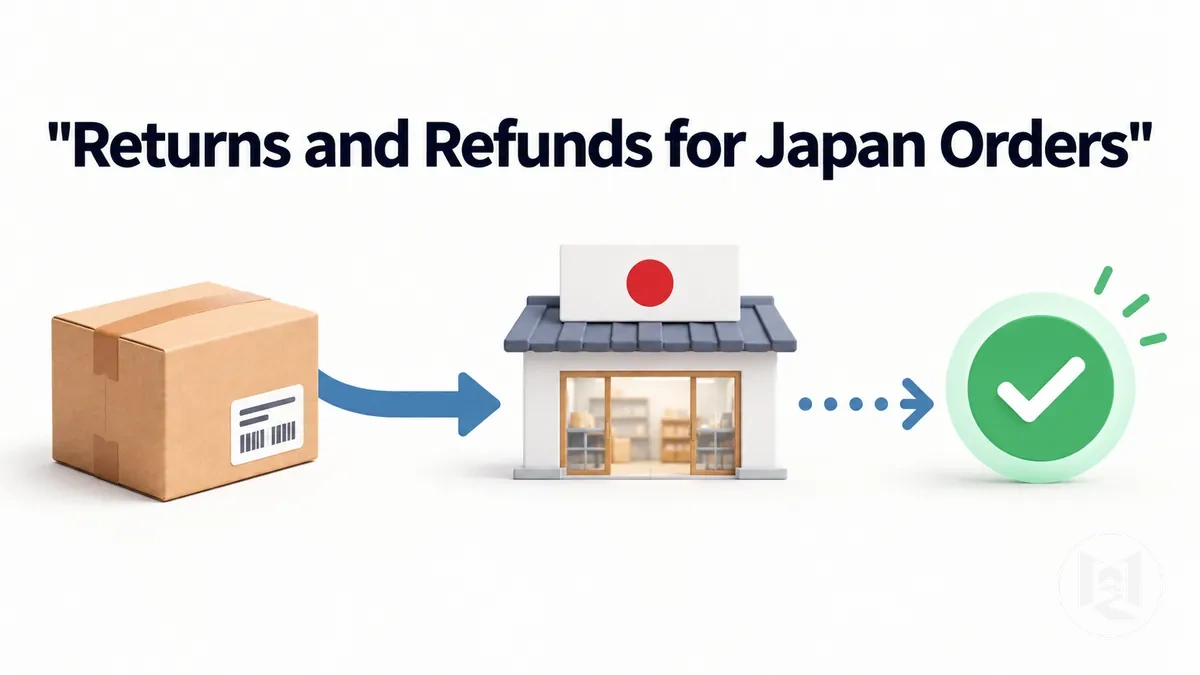
Return-to-Japan decision path
Use these checkpoints in order. The exact outcome remains specific to the seller or intermediary policy and the written return instructions for your order.
-
Check eligibility
Match the return reason, request timing, item condition and required evidence to the policy that governs the order.
-
Identify who controls the return
For a direct order this is usually the seller; a proxy can add its own service terms, while a forwarder mainly changes transport, evidence and return logistics.
-
Return only under the approved instructions
Confirm the address, deadline, return identifier, packaging or declaration requirements, permitted shipping method and cost arrangement, then preserve proof of dispatch and delivery.
-
Verify physical and financial completion separately
Confirm receipt or inspection, refund approval and payment posting, then check which components were actually refunded: merchandise, original shipping, return shipping, service fees and any currency-conversion difference.
Table of Contents
When an Overseas Order from Japan Is Eligible for Return or Refund
An overseas order from Japan is eligible for a return or refund only when the applicable seller or intermediary policy accepts the return reason, request timing, item condition, and required evidence.
Overseas status alone does not establish eligibility, and the relevant request deadline and restrictions come from the return policy or refund policy that governs the international order.

- Governing policy: The seller or intermediary must allow the type of return being requested; if the applicable policy excludes that situation, the request may not proceed.
- Request deadline: The return request must be made within the period defined by the applicable policy; a request made after that period may no longer qualify even when the return reason would otherwise be accepted.
- Return reason and item condition: A change-of-mind request, damaged item, defective item, or incorrect item can be treated differently, and the item's condition can affect which return or refund remedy remains available under the policy.
- Evidence: When the policy requires proof of purchase, photographs, packaging information, or other documentation, missing evidence can prevent the seller or intermediary from approving the request.
- International-order restrictions: A policy may apply different return procedures or limitations to an international order, so eligibility depends on whether the overseas transaction satisfies those stated conditions.
The same item can therefore produce a different eligibility outcome under different circumstances.
For example, a seller policy may reject a buyer-preference return while accepting a request involving a damaged or incorrect item when the required evidence is provided.
Policy-specific timing rules and item-condition requirements then refine whether the particular return or refund request can proceed.
Store-Specific Return Rules and Request Deadlines
The applicable store policy or service policy controls the return window and request procedure for an international order from Japan, so there is no single request deadline that applies across all stores.
The buyer should verify the stated request period, when that period begins, the required contact channel, any prior authorization, and any international-order conditions before starting the return.

- Return window: Use the request period stated in the governing store policy rather than assuming a standard number of days.
- Start of the request period: Check which event the policy uses to begin the return window, such as a policy-defined purchase, shipment, delivery, or receipt point.
- Contact channel: Submit the return request through the channel specified by the seller or service when the policy requires a particular form, account process, email address, or support route.
- Prior authorization: If the policy requires approval or return instructions before shipment, sending the item back without that authorization may leave the request outside the stated procedure.
- International-order conditions: Check whether the policy applies separate exclusions, instructions, or procedural requirements to an international order before arranging the return.
An in-window request that follows the stated contact and authorization procedure can remain actionable under the applicable policy, while the same return reason submitted after the policy deadline may no longer qualify under that return window.
A request may also fall outside the stated procedure if the buyer uses the wrong contact channel or ships the item before required authorization is obtained.
The exact consequence is determined by the governing policy, so each timing and procedural condition should be verified before the item is sent back.
Item Condition Requirements and Non-Returnable Cases
Item condition can independently affect return eligibility even when the request is made on time.
The applicable seller policy may distinguish between an unused item, an opened or used item, a complete item with its original packaging and accessories, and an altered or incomplete item.
The illustration below labels these item states as policy checks whose treatment can differ by seller policy.

- Unused or opened condition: A seller policy may treat an unused item differently from one that has been opened or used, and opening or use can change eligibility when the policy makes that condition relevant.
- Original packaging: When original packaging forms part of the stated return condition, missing or materially incomplete packaging can affect whether the item satisfies the policy requirements.
- Tags and accessories: Tags, manuals, parts, cables, or other included accessories may be part of the completeness requirement, so missing components can change the eligibility decision.
- Alteration or incomplete condition: An item that has been altered, personalized, assembled, or made incomplete after receipt may fall within a policy-defined exclusion when the governing seller policy specifies that state.
- Non-returnable condition: A seller policy may designate particular item states as non-returnable, but that status comes from the applicable policy and condition rather than from a universal rule for online orders from Japan.
The cause of an item's condition can also change its policy implication.
Goods that arrive damaged may be treated differently from goods that become used, altered, or incomplete after the buyer receives them, even when both are no longer in their original state.
Original packaging, tags, accessories, and alterations therefore affect eligibility only when the applicable seller policy makes those conditions relevant.
The seller policy ultimately determines how each item state is treated for return eligibility.
How the Ordering Method Changes Return Responsibility
Return responsibility changes with the ordering method because the contractual and logistical parties differ between a direct purchase, proxy buying, and package forwarding.
In a direct purchase the buyer normally deals with the seller, while proxy buying introduces a proxy service into the purchase relationship and package forwarding introduces a forwarder mainly into the transport path; the exact responsibilities still depend on the seller and service terms.
The image below shows how those different parties can change the return and refund path without ranking the ordering methods.
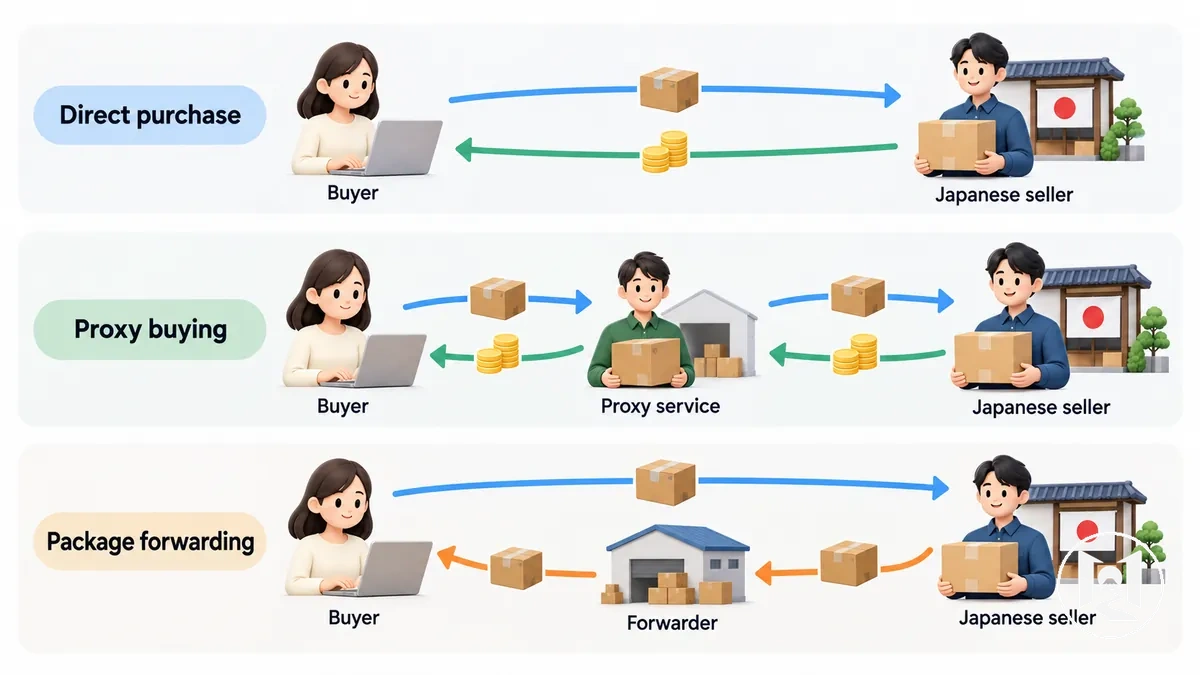
The comparison below uses the same functions for each ordering arrangement: who controls the purchase relationship, who provides return authorization, the typical return route, and how refund handling works.
These roles also affect shipping responsibility and possible fee exposure because the party that sold, purchased on behalf of the buyer, or forwarded the parcel may have different procedures and cost responsibilities.
| Ordering method | Who controls the purchase relationship | Who authorizes the return | Typical return route | Refund handling |
|---|---|---|---|---|
| Direct purchase | The buyer and seller have the direct purchase relationship. | The seller typically authorizes the return under its policy. | The buyer normally returns the item to the seller or another destination specified by the seller, with return shipping responsibility determined by the applicable policy. | The seller typically processes an approved refund through the payment or refund method covered by its policy. |
| Proxy buying | The proxy service commonly makes the purchase from the seller on the buyer's behalf, so the proxy may control communication with the seller. | The proxy service may need to request or coordinate return authorization with the seller, subject to both the seller policy and the proxy service terms. | The item may need to move from the buyer to the proxy service, seller, or another specified return destination, depending on the approved procedure. | A seller refund may pass through the proxy service before reaching the buyer, or be handled according to the proxy service's stated refund process and applicable fees. |
| Package forwarding | The buyer usually retains the purchase relationship with the seller, while the forwarder handles receipt and onward shipment of the parcel. | The seller generally controls return authorization unless the forwarder's service terms provide a separate return-assistance process. | The buyer may return the item directly to the seller or use a route involving the forwarder when that service is available and authorized. | The seller usually handles the merchandise refund with the buyer, while forwarding charges and related logistics costs are governed separately by the forwarder's terms. |
The practical difference is which party must approve, receive, communicate about, or financially process each part of the return.
A proxy service can sit between the buyer and seller for authorization and refund handling, whereas a forwarder may be involved mainly in the physical return route while the buyer retains the seller relationship.
Individual service terms can change these general patterns, so responsibility should be identified from the specific ordering arrangement rather than treating one method as universally responsible for the entire return.
Return Responsibility for Orders Bought Directly from a Japanese Store
With a direct purchase from a Japanese store, the buyer normally deals directly with the seller for the return request under that seller's applicable policy.
The seller is typically the primary contact for return authorization, return instructions, and the return address, subject to the shipping and payment arrangements used for the order.
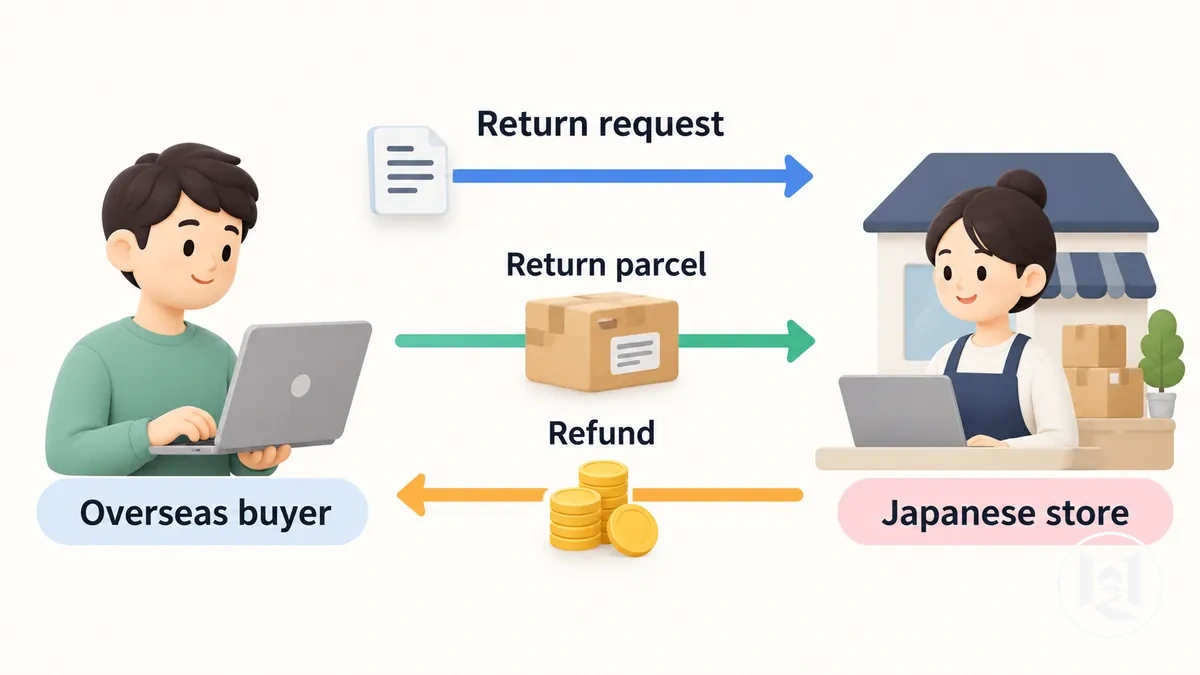
After return authorization, the seller policy determines where the item must be sent and whether the buyer or seller is responsible for the shipping cost under the stated return reason and conditions.
Refund processing is also governed by the seller's policy and the payment method used, including the route and conditions for issuing an approved refund.
If the return results from a seller error, the policy may assign shipping responsibility differently from a buyer-initiated return such as a preference change.
These responsibilities therefore remain specific to the Japanese store's policy rather than applying as universal rules to every direct order.
Return Responsibility for Orders Placed Through a Proxy Buying Service
With proxy buying, the proxy service may become the buyer's practical return interface because it placed the purchase or handled payment on the buyer's behalf.
Communication with the original seller and return authorization may therefore pass through the proxy rather than directly through the buyer, which is why the diagram below shows the proxy between buyer and seller without implying that every proxy service can execute a return.
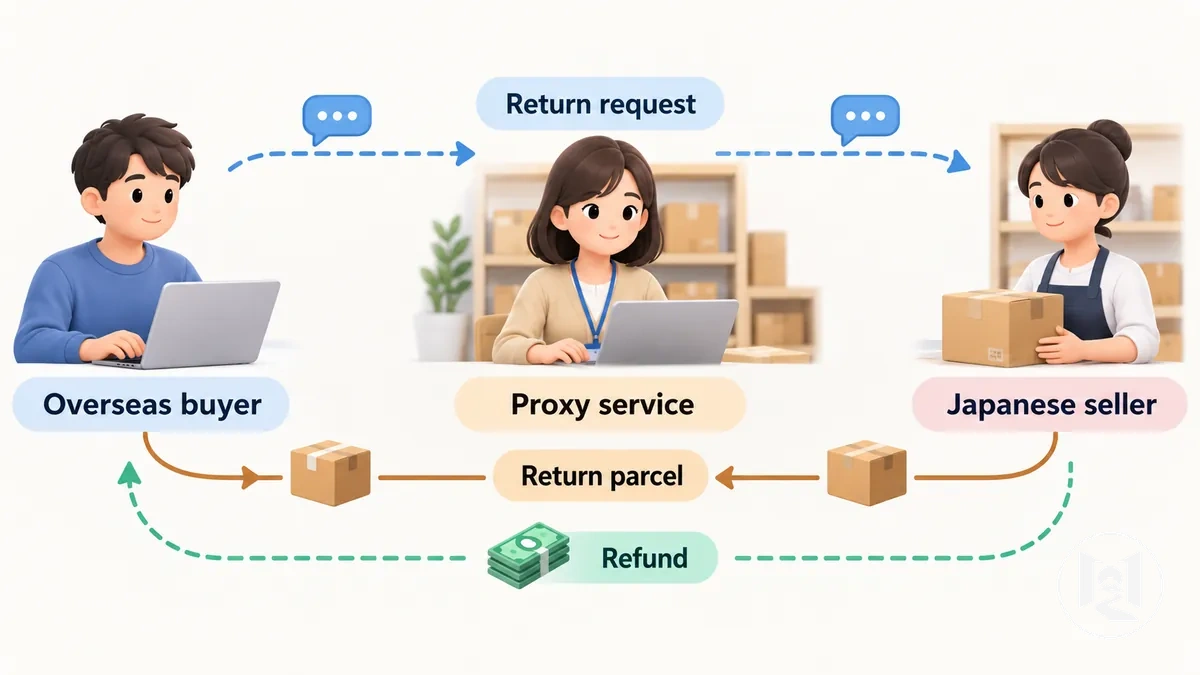
Return eligibility can depend on the original seller's policy, while the proxy's separate service terms determine whether and how the proxy can request, coordinate, or execute the return for the buyer.
Those service terms can also affect communication, the return procedure, and how any approved refund is passed through when the proxy handled the original payment.
For example, the original seller may permit a return, but the proxy service may still restrict return execution under its own terms, leaving seller acceptance alone insufficient to complete the process.
Return responsibility therefore depends on both the seller's conditions and the proxy service's stated role in the transaction.
Return Responsibility for Orders Sent Through a Package Forwarder
With a package forwarder, the forwarder generally handles parcel transport rather than the original sale, so the buyer and seller usually remain the parties connected to purchase responsibility and return authorization.
The forwarding service can still affect return logistics because its parcel handling, parcel condition records, and service terms determine what evidence or return assistance may be available.
How to Complete an International Return to Japan
The international return process should normally follow this sequence: document the issue, contact the responsible seller or intermediary and obtain approval, send the package back according to the return instructions, then verify receipt and refund confirmation.
Keeping these stages in order helps preserve the evidence needed to support the return from the initial request through refund processing.
Return authorization should normally be obtained before shipment because the approved return address, packaging requirements, carrier options, and other instructions can differ by seller, proxy service, forwarder, carrier, and destination country.
Documentation, tracking, and proof of return should be retained as the process moves from approval to shipment and delivery confirmation.
The sequence below provides the high-level workflow without replacing the specific instructions issued for the return.
- Document the issue and make contact: Record the relevant item condition, order details, and available evidence, then contact the seller or responsible intermediary so the return request can be assessed.
- Obtain approval and return instructions: Confirm that the return is authorized and follow the supplied instructions for the return address, package preparation, and any route-specific requirements before sending the item.
- Send the return and preserve proof: Package the item as instructed, use tracking when required or available for the approved return method, and keep shipment records as proof of return and delivery progress.
- Confirm receipt and verify the refund: Check that the return has been received or recorded by the responsible party, then verify the refund confirmation and subsequent payment posting according to the applicable seller, intermediary, and payment-method process.
Document the Issue and Contact the Responsible Party
Before altering, discarding, or returning the item, document what was ordered, what problem occurred, and the delivery date so the condition at the time of the return request is preserved.
Keep the order number and proportionate evidence, such as photos or video when relevant, before taking any action that could change the item or packaging condition.
The evidence should match the problem: damage, a wrong item, or another item discrepancy may require condition evidence, while an unresolved non-delivery or tracking problem may rely on order and shipment records rather than item photos.
Preserve packaging condition when it is relevant to the issue, but do not assume that every return requires the same documentation.
Then send a written request to the responsible party that controls the return decision so the problem and reporting date are recorded before return authorization is considered.
- Identify the order: Record the order number, relevant order details, and delivery date or current shipment status so the responsible party can identify the transaction.
- Record the problem: Describe the item discrepancy clearly and capture photos or video when relevant to show observable damage, incorrect goods, missing components, or another condition-based issue.
- Preserve relevant evidence: Keep packaging, labels, shipment records, and other material that relates to the problem when those items may help establish what was received and in what condition.
- Contact the responsible party: Submit a written request through the applicable seller or intermediary contact channel, state the problem, identify the order, and provide the relevant documentation requested for evaluation.
Confirm Return Approval, Address, and Conditions
Before shipment, confirm the return address, deadline, any required reference number, packaging rules, declared contents instructions, permitted carrier or service, and any stated shipping-cost arrangement.
Do not assume that a prepaid label will be supplied or that the domestic return process used in Japan applies to an international return.
Retain the written instructions and approval as evidence of the conditions under which the return was authorized.
- Return approval: Confirm that the responsible party has accepted the return and authorized shipment.
- Return address: Use the destination provided in the written instructions rather than assuming the original sender or store address is correct.
- Deadline: Verify the applicable dispatch or receipt deadline stated in the approval terms.
- Reference number: Include any return authorization, case, or reference number when the instructions require one.
- Packaging rules: Follow any stated requirements for protecting the item, including required packaging components or condition-related instructions.
- Declared contents: Use the description or declaration instructions provided for the return shipment when applicable.
- Carrier or service: Confirm whether the responsible party specifies, restricts, or approves particular shipment methods before choosing a carrier or service.
- Shipping-cost arrangement: Verify whether return shipping is paid by the buyer, arranged by the responsible party, or subject to stated reimbursement terms rather than assuming a prepaid label or reimbursement will be provided.
Package and Send the Item Back with Proof of Return
Package the approved return so the item remains protected, identifiable, and traceable through dispatch.
International return shipping should follow the return instructions because the parcel, shipment record, and any required declaration must remain connected to the authorized return.
Use protective packaging and include any required return identifier before sealing the parcel.
Complete a customs declaration or postal declaration accurately when the approved route requires one, using the applicable instructions rather than assuming a universal form or procedure.
Choose a carrier or service that complies with the return instructions, and retain tracking, proof of posting, and the receipt as the shipment record.
An unapproved shipping method can affect acceptance or reimbursement when the authorization terms restrict the permitted return method.
- Protect the item: Use protective packaging appropriate to the item and follow any packaging requirements stated in the return instructions.
- Include the return identifier: Add the required return authorization, reference number, or other identifier so the parcel can be matched to the approved return.
- Complete applicable declarations: Provide an accurate customs declaration or postal declaration when required for the route, describing the returned contents according to the applicable instructions.
- Follow the approved shipping method: Use a carrier or service that meets any restrictions or requirements stated in the return instructions rather than selecting a method solely because it is cheaper.
- Preserve dispatch proof: Obtain tracking or proof of posting when available or required and keep the receipt showing that the return parcel was accepted for shipment.
- Retain the shipment record: Keep the tracking details, proof of posting, receipt, and relevant declaration records until the return shipment no longer needs to be verified.
Confirm Return Receipt and Refund Completion
Sending the return parcel does not complete the return process; delivery, return acceptance, and refund posting must be verified separately.
Return tracking and delivery confirmation can establish that the parcel reached its destination, but they do not by themselves confirm refund approval or that money has been credited through the payment method.
After delivery, check whether the seller or intermediary has acknowledged receipt and whether any required inspection has been completed.
Refund approval is a separate checkpoint from physical receipt, and payment-method posting can occur later according to the applicable process.
Verify the credited amount as well, allowing for any documented deduction or currency difference that applies to the transaction.
If the expected timeline stated by the responsible party or payment provider passes without the relevant confirmation, preserve the records and move to evidence-based troubleshooting.
- Delivery confirmation: Check the return tracking to confirm whether the parcel has been delivered to the approved destination.
- Receipt and inspection: Verify that the responsible seller or intermediary has recorded receipt and, when applicable, completed or updated the inspection status.
- Refund approval: Confirm that the refund has been approved rather than treating parcel delivery as proof of financial completion.
- Payment posting: Check the relevant payment method for the refund posting instead of assuming that an approval notice means the funds have already appeared.
- Credited amount: Compare the amount actually credited with the approved refund and account for any stated deduction or currency difference that applies.
- Records: Retain return tracking, delivery confirmation, receipt or inspection updates, refund approval, and payment records until both the physical return and financial refund are confirmed complete.
How Damaged, Defective, or Incorrect Items Change Return Eligibility
A damaged item, defective item, or incorrect item can be treated differently from a buyer-preference return because the problem type and supporting evidence can change return eligibility, responsibility, and the available remedy.
The seller policy still controls whether the case results in an exchange, replacement, partial refund, full refund, return, or another stated outcome.
The evidence should match the problem being reported.
Visible damage can be supported by photos of the item, packaging condition, and delivery condition; a defective item may require evidence showing the fault or how the product fails to function; and an incorrect item can be compared with the order details to show the mismatch.
The relevant policy question is therefore not only whether a return is permitted, but how that particular problem type is treated and what evidence the seller requires.
The comparison below separates those questions without assuming that any problem automatically produces free return shipping or a particular refund.
| Problem type | Evidence to preserve | Policy question | Possible remedy |
|---|---|---|---|
| Damaged item | Photos of visible damage, packaging condition, delivery condition, and relevant order details. | Whether the seller policy treats the condition as damage associated with delivery or another covered damage case, and what evidence is required. | Depending on the policy and circumstances, the seller may offer a replacement, exchange, partial refund, full refund, or authorized return. |
| Defective item | Photos or video when relevant, a clear description of the fault, and records showing when the defect was observed. | Whether the reported product defect falls within the seller's return, replacement, or other applicable remedy terms and whether evaluation is required. | The policy may provide for an exchange, replacement, partial refund, full refund, or return when the defect satisfies its conditions. |
| Incorrect item | Order details, item identifiers or visible characteristics, and photos showing the mismatch between what was ordered and what was received. | Whether the seller confirms that the delivered item differs from the order and what return or correction procedure applies. | The seller may authorize an exchange, replacement, full refund, partial refund, or return according to its stated policy and the circumstances. |
| Buyer-preference return | Order details and any item-condition or packaging evidence required by the seller policy. | Whether the policy permits a return when the item is not damaged, defective, or incorrect, and which conditions or costs apply. | A return, exchange, partial refund, or full refund may be available if the seller policy permits the request and its conditions are met. |
For example, visible transit damage documented before packaging is discarded can provide evidence of the item's delivery condition, while a defect discovered only after opening may require documentation of the fault and when it became apparent.
An incorrect item can instead be supported by showing the mismatch between the order and the goods received.
Timely documentation and contact help the seller evaluate the applicable remedy, but they do not guarantee return approval, free return shipping, a replacement, or a full refund.
How Return Shipping Responsibility Is Determined
Return shipping responsibility depends on the return reason, the applicable seller policy or intermediary policy, the ordering method, and the terms confirmed in the return authorization rather than on one universal Japan-wide rule.
These factors determine whether the buyer, seller, or intermediary pays the return postage initially and whether that cost may later be reimbursed.
A seller-fault case, such as an incorrect or damaged item, can be treated differently from a buyer-preference return, but the governing policy still determines the shipping-cost arrangement.
A prepaid label means the approved return postage is arranged in advance, while a reimbursement arrangement may require the buyer to pay first and submit the required shipping evidence afterward.
An intermediary can also affect the payment route when it controls the return process under its own terms.
The party that pays at dispatch is therefore not necessarily the party that ultimately bears the return shipping cost.
- Return reason: Check whether the return results from seller fault, such as a wrong or damaged item, or from buyer preference. The reason can change which party is assigned return shipping responsibility under the applicable policy.
- Governing policy: Apply the seller policy or intermediary policy that controls the transaction. Its terms determine whether return postage is paid by the buyer, arranged by the responsible party, or eligible for reimbursement under stated conditions.
- Ordering method or intermediary: Identify whether the purchase was direct or involved a proxy or other intermediary, because the service terms can determine who coordinates the return and how shipping costs are handled without changing the underlying reason for return.
- Approved shipping method: Follow the authorized return method and any supplied prepaid label or service restrictions. Using an unapproved method can affect whether the shipping cost is accepted for reimbursement when reimbursement depends on the approved terms.
- Reimbursement evidence: When the buyer must pay return postage initially under an approved reimbursement arrangement, retain the receipt, proof of posting, and other evidence required by the responsible party to support the reimbursement request.
What the Refund May Cover and Which Costs May Not Be Recovered
A refund for an overseas order from Japan can contain several separate monetary components, so the refund amount may not equal the buyer’s total original outlay.
A full refund of the item price does not by itself establish that original shipping, return shipping, service fees, exchange-rate differences, or other separately collected charges will also be recovered.
The item price is normally evaluated under the seller policy, while original shipping can have separate refund conditions.
Return shipping may be reimbursed only when the applicable return arrangement provides for reimbursement, and a service fee charged by a proxy or intermediary can be governed by that service's own terms rather than the seller's policy.
The payment method and exchange rate at the time of the refund can also affect the credited amount when currency conversion occurs.
| Charge component | Who collected it | Governing condition | Possible refund treatment |
|---|---|---|---|
| Item price | Seller, or an intermediary that processed the purchase | The seller policy and approved remedy for the returned item. | The merchandise amount may be refunded in full or in part according to the approved return or refund terms. |
| Original shipping | Seller, marketplace, intermediary, or shipping provider, depending on the order arrangement | The policy or terms governing the original delivery charge and the reason for return. | Original shipping may be included in the refund, excluded from it, or treated separately from the item price. |
| Return shipping | Buyer, seller, intermediary, or carrier according to the approved return method | The return authorization, shipping-cost responsibility, and any prepaid-label or reimbursement arrangement. | The buyer may pay the return shipping without reimbursement, receive an approved reimbursement, or use a prepaid arrangement when one is provided. |
| Intermediary or service fee | Proxy, forwarding service, marketplace, payment service, or other intermediary | The terms of the service that collected the fee and whether those terms provide for a refund after a return. | The service fee may be refunded, partially refunded, or remain outside the merchandise refund according to the applicable service terms. |
| Exchange-rate difference | Payment provider or card issuer through currency conversion | The currencies, conversion timing, payment method, and exchange rate applied when the original payment and refund are processed. | The credited amount in the buyer's account currency can differ from the original converted amount even when the same merchandise amount is refunded. |
Each component therefore has to be matched to the party that collected it and the rule or policy that governs that charge; an import charge, where one was collected, may follow a separate authority or refund process and should not be assumed to follow the seller's return policy.
Broader calculation of the costs involved in overseas Japanese orders is separate from determining which return-related components are recoverable.
For example, a buyer can receive the full item price back while still recovering less than the total amount originally spent if original shipping, a service fee, or a currency difference is not included in the approved refund.
What to Do When a Return or Refund Is Delayed or Disputed
For a delayed return or delayed refund, first identify the stage where the approved process stopped before deciding what to do next.
A stalled shipment, missing receipt acknowledgment, pending inspection, absent seller response, intermediary delay, and missing payment posting require different evidence checks and should not be treated as proof of fault by themselves.
Start with tracking and delivery proof when the return parcel is still in transit or its receipt is unclear.
If delivery is confirmed, move to the seller or intermediary records to determine whether receipt, inspection, or a return decision is pending.
If refund approval already exists, the relevant checkpoint becomes the payment method and whether the refund has posted.
The diagnostic flow below ties each stalled stage to the evidence that can verify its status and the next corrective direction.
Find the stalled checkpoint
Return shipment not delivered
- Symptom
- Tracking does not show delivery to the approved return destination.
- Likely explanation
- The parcel may still be moving, awaiting a carrier update, or affected by another shipment-stage delay.
- Check
- Compare the tracking record, proof of posting, approved return address, and return authorization.
- Corrective direction
- Follow up on the shipment using the documented carrier status and preserve the shipment records rather than assuming the seller or intermediary has received the return.
Delivery shown but receipt not acknowledged
- Symptom
- Tracking or delivery proof indicates arrival, but no receipt acknowledgment appears in the seller response or correspondence.
- Likely explanation
- The parcel may be awaiting internal receipt processing, matching to the return authorization, or handoff to an intermediary.
- Check
- Match the delivery proof, return identifier, authorization, and correspondence to the approved return.
- Corrective direction
- Send a written follow-up identifying the delivered parcel and request confirmation of receipt or its current handling status.
Inspection or decision pending
- Symptom
- Receipt has been acknowledged, but inspection, return acceptance, or refund approval has not been confirmed.
- Likely explanation
- The return may still be under the seller's or intermediary's stated evaluation process, or additional information may be awaiting review.
- Check
- Review the recorded receipt date, inspection status, prior seller response, return authorization, and any requested evidence.
- Corrective direction
- Ask for the current inspection or decision status and respond to any documented information request without assuming that delay means rejection.
Intermediary handling pending
- Symptom
- The seller, proxy, forwarder, or other intermediary has one part of the return record, but the next handoff or refund action is not confirmed.
- Likely explanation
- Communication or processing may be pending between parties that perform different roles in the return.
- Check
- Compare the intermediary correspondence, seller response, delivery evidence, and stated responsibility under the approved return process.
- Corrective direction
- Direct the next written request to the party responsible for the stalled handoff and identify the specific confirmation or action that remains missing.
Refund approved but not posted
- Symptom
- Refund approval has been confirmed, but the credited amount does not yet appear through the payment method.
- Likely explanation
- The financial posting stage may still be pending even though the return decision is complete.
- Check
- Compare the refund approval, stated refund details, payment records, and any subsequent correspondence.
- Corrective direction
- Request the refund posting status from the responsible party or payment provider using the approval and payment records as evidence, without treating the delay alone as proof that the refund was not issued.
The evidence should follow the stalled stage: shipment questions rely on tracking and delivery proof, handling questions rely on return authorization and correspondence, and financial questions rely on refund approval and payment records.
If the expected status or timeline stated by the responsible party passes without the next confirmation, make the follow-up specific to the missing checkpoint and retain the response as part of the dispute record.
Unresolved delivery or tracking problems before a return begins are a different troubleshooting context from a delayed refund after an accepted return, so they should not be merged into the same diagnosis.
For a return or refund already in progress, use the records tied to the identified failure point to make the next evidence-based written request rather than inferring intent from silence or delay.
Merchandise Return Refunds Are Different from Japan's Tax-Free Shopping Refunds
A merchandise return refund for an online order and a tax-free shopping refund are different processes even though both use the word “refund.” A merchandise return is triggered by a purchase problem or another return reason handled under the applicable seller or intermediary policy, while the tax-free process concerns consumption tax and separate tax-free shopping eligibility.
Key distinction
Merchandise return or refund
- Trigger
- A purchase problem or another return reason.
- Governing basis
- The applicable seller or intermediary return conditions.
- Responsible party
- The seller or relevant intermediary normally evaluates the product-return request.
- Eligibility
- The circumstances of the goods and the return policy that governs the order.
Tax-free shopping refund
- Trigger
- A separate tax-free shopping claim involving consumption-tax treatment.
- Governing basis
- The conditions of the tax-free shopping system rather than the merchandise return policy.
- Responsible party
- The participating retailer or refund service under the applicable tax-free process.
- Eligibility
- The separate conditions that govern tax-free shopping.
Returning goods because of a purchase problem is therefore not the same activity as claiming a tax-related refund on eligible shopping.